
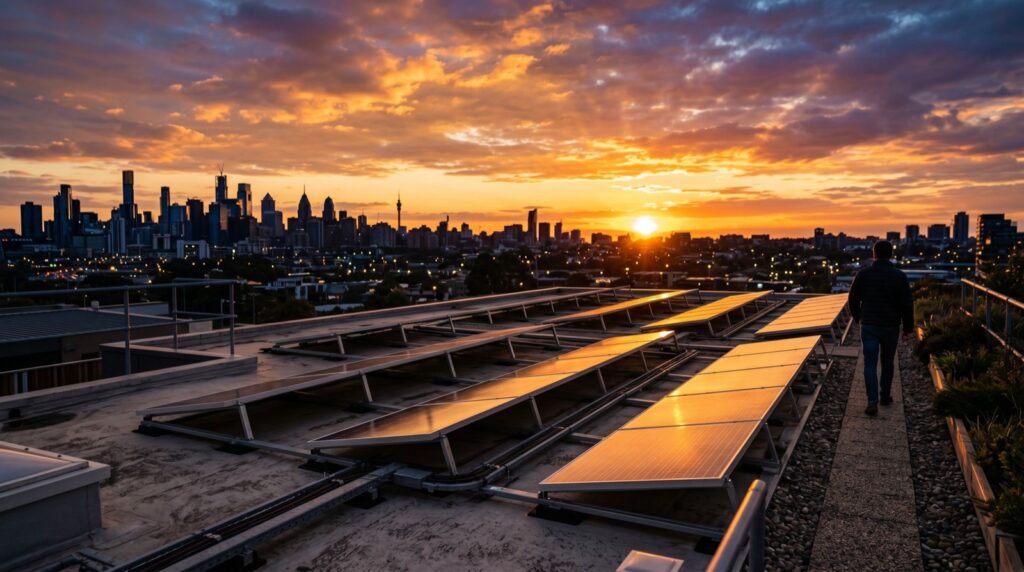
A smart solar installation in Rawalpindi is no longer a luxury purchase; in 2026 it behaves more like a fixed-income investment that hedges against inflation. This article breaks down the return on investment, net metering economics, and the mistakes that quietly erode savings.
Treating a solar installation in Rawalpindi as an investment
Most buyers ask about upfront price first. The sharper question is what annual return the system delivers, because that number decides whether solar beats leaving money in a savings account.
A quality rooftop array in the twin cities typically returns 20 to 30 percent per year in avoided electricity costs. Compare that to fixed deposits, and the appeal becomes obvious, especially since the savings grow every time the grid tariff rises.
Solar also carries almost no ongoing cost. After the initial spend, sunlight is free, panels degrade slowly, and maintenance is minimal. The World Bank’s ESMAP program highlights that distributed solar is among the most cost-effective ways for South Asian households to secure affordable power.
How net metering multiplies your savings
Net metering is the engine behind fast payback in Rawalpindi. Your rooftop overproduces during sunny hours, exports the surplus to the grid, and your meter runs backward. Those exported units become credits you draw down after sunset.
Here is the practical effect. A house that consumes most of its power in the evening can still zero out its daytime overproduction against the night load, turning a bill that once ran to tens of thousands of rupees into a fraction of that.
The bidirectional meter explained
Under net metering, your distribution company installs a bidirectional meter that tracks both import and export. At month end you pay only for the net units consumed. When exports exceed imports, credits roll forward, which is common in spring and autumn when cooling loads drop.
What size system delivers the best return?
Oversizing wastes capital; undersizing leaves savings on the table. The sweet spot matches your annual consumption without wildly exceeding your sanctioned load.
| Profile | Monthly Units | Recommended Size | Payback Period |
|---|---|---|---|
| Modest home | 400 – 600 | 5 kW | 3.5 – 4.5 years |
| Standard family | 700 – 1,000 | 8 – 10 kW | 3 – 4 years |
| Large villa | 1,200+ | 12 – 15 kW | 3 – 4 years |
Notice that payback stays remarkably consistent across sizes. That is because the per-watt cost drops slightly as systems get larger, offsetting the higher total spend. The lesson: size to your bill, not to your neighbor’s roof.
Common mistakes that shrink your ROI
I have seen well-intentioned buyers lose years of savings through avoidable errors. A few patterns repeat again and again.
- Chasing the lowest bid: A cheap inverter that fails in year three erases the discount many times over.
- Skipping the shade study: A single unshaded morning tree can slash a string’s output.
- Ignoring net metering: Without it, evening consumption pays full tariff and payback stretches out.
- Undersized wiring: Thin DC cable loses energy as heat and can overheat over time.
- No monitoring: Without an app you may not notice a dead panel for months.
Choosing reliable local experts for the design phase prevents most of these traps before they cost you anything.
Does location within the region change the numbers?
Yes, subtly. Rawalpindi and Islamabad share similar irradiance, so a system here performs close to the national benchmark. A city farther north in Punjab may see slightly different haze and temperature patterns that nudge output.
For example, buyers comparing quotes for solar panels in Sialkot often find comparable payback because the underlying economics of net metering apply province-wide. What actually varies more than geography is installer quality and component grade.
For deeper guidance and regional pricing, teams handling solar installation in Rawalpindi can benchmark your bill against homes of similar size and give you a realistic yield estimate before you commit.
Battery storage: worth it or not?
Batteries add cost and lengthen payback, so treat them as a backup investment rather than a savings one. If load-shedding disrupts your work or comfort, the peace of mind justifies the premium. If reliability is acceptable, a grid-tied system with net metering delivers the fastest financial return.
Reading a quote like a financial analyst
Two quotes for the same system size can differ by hundreds of thousands of rupees, and the gap usually hides in details buyers skim past. Treat the document like an investment prospectus.
First, check whether the price is turnkey or excludes net metering, structure, or protection gear. A low headline number often balloons once those “extras” appear. Second, compare the inverter and panel models line by line, because a brand swap can quietly halve the equipment quality.
Third, confirm the warranty durations and who honors them. A workmanship warranty backed by a local firm is worth far more than a paper promise from a distant importer. Insist that every figure appears in writing before you commit any deposit.
The hidden cost of downtime
Financial models often ignore reliability, yet a cheap inverter that fails during peak summer can cost you weeks of generation while you wait for a replacement. Factor expected uptime into your return calculation. A slightly pricier unit with a local service center frequently delivers a better real-world yield than a bargain box with no support.
How inflation makes solar a defensive asset
Grid tariffs rarely fall, and every increase widens the gap between what you would have paid and what you now save. That dynamic turns a solar system into a hedge that appreciates in usefulness over time.
Think of your rooftop as locking in today’s energy price for the next two decades. While neighbors absorb each tariff revision, your bill stays anchored to the fixed cost you already paid. In an inflationary environment, few household purchases behave this defensively.
A five-step plan to lock in your return
- Pull your last twelve electricity bills and calculate average monthly units.
- Request itemized quotes from at least three vetted installers.
- Confirm every quote includes net metering application support.
- Compare warranty terms on panels, inverter, and workmanship side by side.
- Choose the installer with the strongest track record, not the lowest sticker price.
Frequently Asked Questions
What return on investment can I expect from solar in 2026?
Quality systems in Rawalpindi typically return 20 to 30 percent annually in avoided bills, with full payback in three to five years. Returns climb further each time the grid tariff increases.
Is net metering hard to get approved?
The process is straightforward but slow. Your installer submits the application to the distribution company, and approval plus meter replacement usually takes three to eight weeks. Registered installers navigate the paperwork fastest.
Do panels lose efficiency over time?
Yes, but gradually. Tier-1 modules degrade around 0.5 percent per year, so after 25 years they still produce roughly 85 percent of their original output, which is why long warranties matter.
Can I expand my system later?
Often yes, if you choose a hybrid inverter with spare capacity and leave roof space. Planning for expansion during the first install saves you a costly inverter swap later.
Turn sunlight into steady returns
A solar installation in Rawalpindi rewards patience and diligence: size it to your real usage, insist on net metering, and pick components built to last. Done right, your rooftop becomes an inflation-proof asset that pays a monthly dividend. Book a professional load audit and get your custom ROI projection this week.